
Stair Lift Installation & Repair in MN, IL, & PA
Stair lift Installations & Elevator Service, in Minneapolis and other cities in green on the map
Stairlift Installs — Contact Us for Pricing!


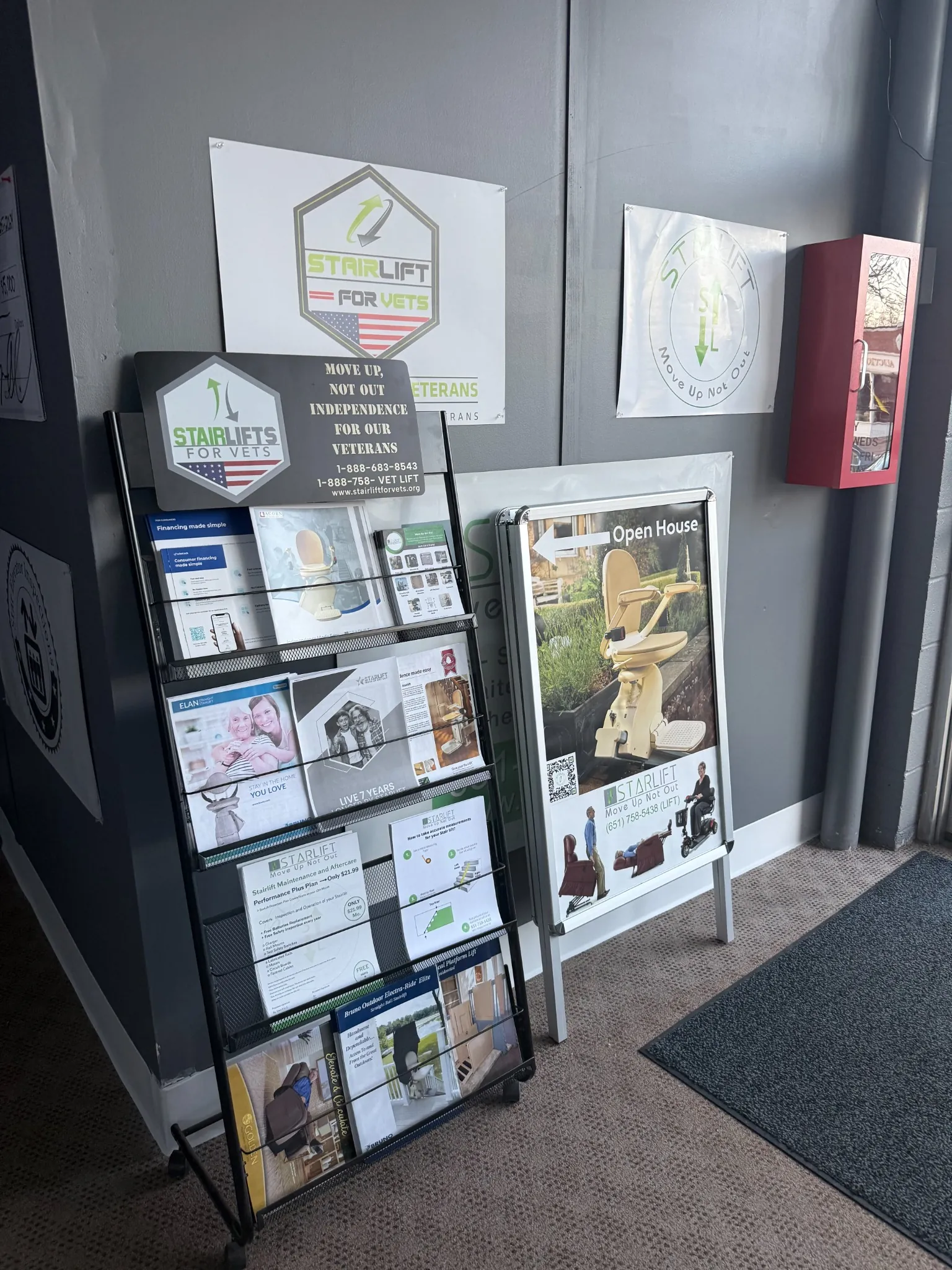


Visit Our Showrooms! (By Appointment)
We invite you to visit our showrooms to explore our stairlifts, mobility equipment, and accessibility solutions in person.
Why pay more for "new"?
Stairlifts certified by Star Elevator Inspections LLC (S.E.I.), a separate company, look new, run like new, and come with a warranty that outperforms most brand-new lifts.
Plus you save thousands!

Better Than New. Here's why.
Choosing a Star Lift S.E.I. Certified stairlift means zero compromise. Each unit is Gold Seal inspected, passing a rigorous 27-point inspection, documented and independently verified, so you can move forward with total confidence.

Better Warranty Than New
Our S.E.I certified units come with a warranty that outperforms what most new stairlift dealers offer. We back every unit we sell because we know what it went through before it got to you.

Independent 3rd-Party Certification
Star Elevator Inspections LLC (S.E.I.) operates as a fully independent third party, performing a rigorous 27-point inspection with detailed documentation, ensuring transparency and trust in every stairlift.

Fast Availability — Often Same Week
No waiting weeks for a manufacturer order. Our S.E.I certified inventory is inspected, certified, and ready to install. Many customers are up and running within days of calling.

Up to 50% Less Than New
New stairlifts can cost significantly more. Our S.E.I certified units are fully installed at a fraction of that cost — the same performance, same safety, dramatically lower price. Contact us for pricing.
27
Point Inspection
Contact Us for Pricing
Fully Installed
100%
Gold Seal certified
S.E.I
Independent 3rd Party
8
States Served
About Us
Trusted Waiver Service Provider:
At Star Lift LLC, we are 100% dedicated to providing mobility equipment solutions that prioritize safety, reliability, and comfort. Our S.E.I.-certified stairlifts look brand new, perform like new, and come with a better warranty than any new lift on the market, all at the best price. Whether you're looking for a new or used stairlift, we have the perfect solution to fit your needs.
As a certified Minnesota Department of Human Services HCBS Waiver Services Provider, we specialize in environmental accessibility adaptations and home modifications for:
- BI Waiver (Brain Injury)
- CAC Waiver (Community Access for Disability Inclusion)
- DD Waiver (Developmental Disabilities)
- CADI Waiver (Community Alternatives for Disabled Individuals)
Proudly Supporting Veterans
Just Ask! StarLift LLC proudly partners with www.stairliftforvets.org to offer discounted stair lifts to veterans in all areas we serve.
Get Started Today!
If you're searching for stairlifts or wheelchair ramps in Minnesota and other locations, let Star Lift LLC be your first call. Our experts will guide you through every step – from consultation to installation to aftercare.
📞 Contact StarLift LLC today to schedule a free in-home consultation and discover how we can make your home or business safer and more accessible.
Click Here To Call: (888) 778-2475 Click Here To Text: (888) 778-2475 or Email: info@star-lift.com

Headquartered in Minnesota. We also serve Illinois, Wisconsin, North Dakota, South Dakota, Kansas City, St. Louis, Pittsburgh, Philadelphia, and Boston, and beyond.
Our Minnesota Mobility Equipment Solutions Include:
Stair Lifts
- New and S.E.I certified reconditioned straight and curved stair lifts
- Trusted brands: Acorn, Bruno, AG Rave
- Battery-powered lifts that work during power outages
- Installed to look and perform like new
- Industry-leading warranties available
Wheelchair Ramps
- Durable wheelchair ramps for homes and businesses
- ADA-compliant ramp solutions
- Custom-built for residential and commercial access
We come highly recommended


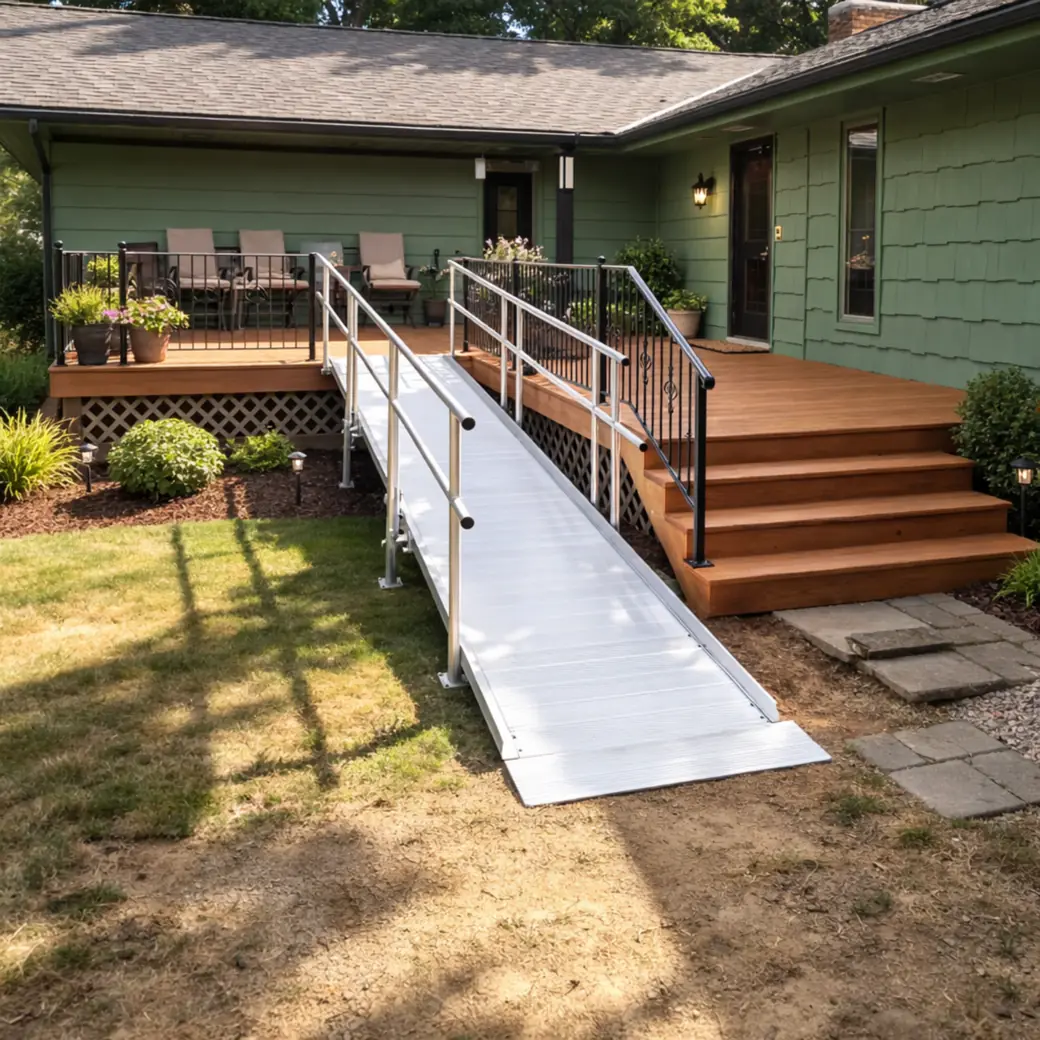
ADA-Compliant Residential Wheelchair Ramps
At Star Lift LLC, we specialize in installing residential wheelchair ramps designed to meet ADA compliance standards for homes. Our ramps ensure accessibility, safety, and ease of use for you and your loved ones.
Why Choose Star Lift for Your Ramp Installation?
- Expert Compliance: We adhere to all ADA guidelines, including proper width, handrails, and landing requirements.
- Code-Ready Solutions: Ensure your home meets accessibility standards and supports mobility needs.
- Experienced Professionals: Our team knows ADA compliance standards inside and out, delivering reliable and hassle-free installations.
Make your home accessible and welcoming with Star Lift's trusted ramp installation services. Whether you're upgrading or starting from scratch, we'll help create a safe, inclusive space for everyone.
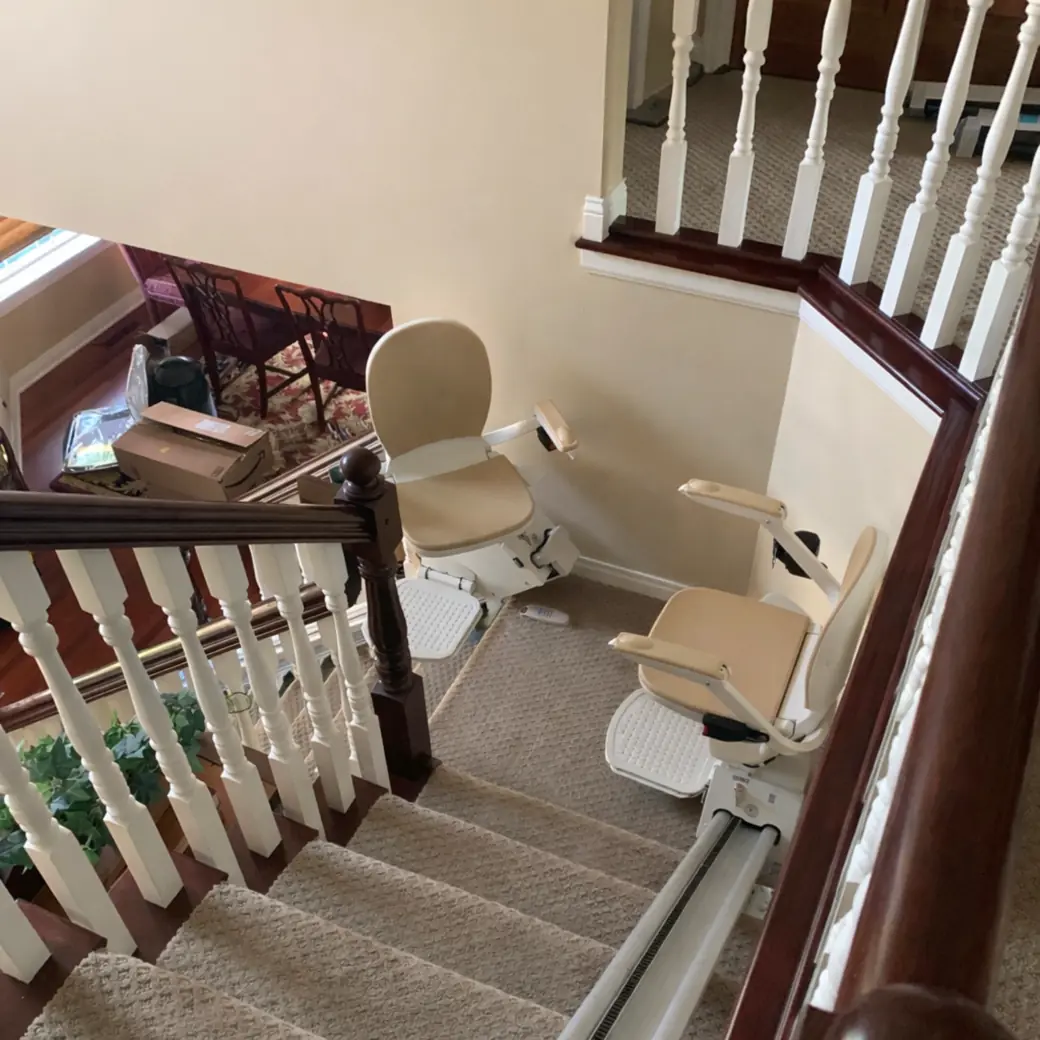
S.E.I Certified Pre-Owned Stairlifts You Can Trust
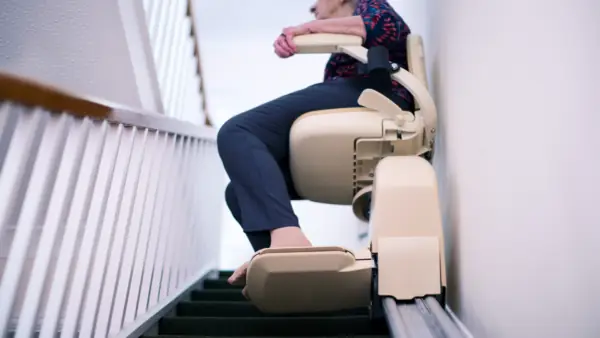
Discounted Veteran Stairlift Program
Elderly Waiver (EW)
This program funds home and community-based services for people age 65 and older who require the level of care provided in a nursing home and choose to live in the community. EW promotes community living and independence with services and supports that address each person's individual needs and choices. EW offers services that go beyond what is available through Medical Assistance. To see if you're eligible, see our stairlift funding guide or call (888) 778-2475.
Community Access for Disability Inclusion (CADI) Waiver
Frequently Asked Questions
About Stair Lifts
How Much Does A Stair Lift Cost?
The answer is – it depends… Modern stairlifts come in all shapes and sizes, so determining the cost of a chair lift for stairs depends on the consumer's needs AND the staircase involved in the installation.
As a general rule, straight-rail stair lift installations typically cost less than curved-rail installations, with the total depending on your staircase and equipment. Contact us for a personalized quote.
How Long Does Installation Take?
Most straight stair lift installations take only a few hours, and curved stair lifts can be installed in a day.
Can I Install It Myself?
It is possible to buy a straight stair lift and install the unit yourself. We often receive calls from people who were lured in by the low cost, only to find that the stair lift does not fit their staircase or the unit does not work correctly. Even worse, the seller either offers no assistance or stops responding altogether, leaving the customer stuck with a dysfunctional, dangerous piece of machinery. The State of MN requires a Permit and an Inspection of this type of mobility equipment. In order to get this, you must have an Elevator License with the state of MN.
Many manufacturers may also void your warranty if you do not have it installed by an authorized dealer/ licensed professional.
What Are The Best Stairlift Brands?
Check here for the best stairlift consumer reports with stairlift reviews on the web.
Can I Buy A Stair Lift If My Stairs Have Curves Or Turns?
Yes, there are specific stairway lift models that are designed to fit staircases that have curves, turns, or intermediate landings. These types of chairlift models have rails that are custom-designed to fit the exact design of your own staircase.
How Often Does My Stairlift Need Servicing?
Your stairlift needs servicing every 6-12 months, depending on the stairlift make and model. This will be detailed in your stairlift manual.
Troubleshooting Beeping?
If the power goes out, the stairlift will start to beep, indicating that it is no longer charging. You can temporarily stop the beeping by turning off the Battery Isolation Switch on the stairlift – it's the large white switch below the seat. If your stairlift has two tubular rails that go around corners, you have a curved stairlift, and the switch will be on the front of the stairlift. If it's straight, it'll be on the back side.
ONLY TURN OFF THIS SWITCH IF YOU CAN REACH IT SAFELY!
Remember to turn the switch back on when you want to use the stairlift.
What Guarantee Or Warranties Do I Get With My Stairlift?
Reconditioned /Used Install Warranty:
- 3-year period on the drive train
- 1-year period on all component parts of the lift
- Including, complimentary service calls during your 1st year with your new product
New Stair Lift Install Warranty:
- 3-year period on the drive train
- 2-year period on all component parts of the lift
What Are The Costs For Service?
- Service Call — contact us for pricing
- Per Hour/Per Tech after the first hour on the job — contact us for pricing.
- Parts will be in additional cost outside of the initial stairway. warranty or extended warranty
- Mileage charges round-trip at the federal rate outside 50 mile radius of the Minnesota Great State
Do You Have A Maintenance Plan?
- Yes, We do!Yes, we also do safety tests once a year!Annual maintenance and Safety Test
Performance Plus Plan — Contact us for pricing
- Covers: Inspection and operation of the Stairlift
- Charger and Batteries
- Rail Mounts,
- Safety Switches
- Clean Charge Contacts
- Lubricated Rails
- Motors
- Circuit Boards
- Foot rest Cables
- Service charge waived on future service calls for one year from the date of the annual maintenance
- Does not include labor for additional necessary repairs
- Parts will be an additional cost if outside of the initial Stairlift warranty
- Price covers 1 hour of labor in addition to the test.
- Does not cover self-made issues. The service rate would apply for maintenance caused by user misuse or damage.
My stairlift was fitted by another company. Do you look after maintenance on these lifts?
Yes! In fact, we receive numerous calls of this nature from clients who are not satisfied with their original stairlift installer company, or they are unable to get support after installation. Our customers are satisfied with our professional, fast response and follow-up, and prefer Starlift to larger mobility chain companies as we are a local, family-run business.
Contact us at 888-788-2475 for further details.
- Covers: Inspection and operation of the Stairlift
Are There Cost Savings Available For Disabled Veterans?
Yes—In most cases, the Department of Veterans Affairs gives cash grants to veterans for home mobility devices. You can look at these 3 programs for details: the Home Improvements and Structural Alterations grant (HISA), the Specially Adapted Housing grant (SAH), and the Special Home Adaptation grant (SHA). Qualified vets can get both a HISA grant and an SAH or SHA grant.
To get these grants, apply using VA Form 26-4555 and send it to your VA regional office. For more information, call 1-800-827-1000.
Starlift is proudly partnered with the DAV and accepts donations for Veterans! We offer a Veteran discount on used/refurbished mobility equipment installs through our Veterans program. Call 888-778-2475
Does Your Company Rent Stairlifts?
Yes, we offer a stairlift rental and lease program.
Call for additional information. 888-778-2475
Can A Stair Lift Be Installed Outside And If So, Will It Be Protected?
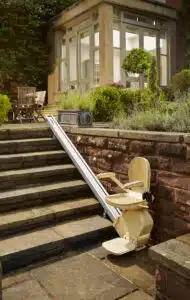
Yes, there are access lift stair-lift models that can be built on a straight or curved outdoor staircase. Outdoor stair lift models are just like indoor models. The only difference is that the outdoor models are built to withstand the outdoor elements, even in Minnesota. There is also a cover that comes with the lift to protect it when it is not in use.
What Are The Electrical Requirements?
A common household 120-volt outlet is all that is needed.
What Are The Different Types Of Stairlifts?
Stair lifts and mobility equipment come in different models to fit many stair formations. Each person must consider their architectural space, lifestyle, and other factors when deciding which type of access lift is right for them.
Straight Stair Lift
Straight stair lifts are designed to go up and down only on straight staircases. Straight lifts are trimmed to fit the staircase, so they can match the exact length of the stairs where installation is taking place.
Straight chair stair lifts are not custom-made but are instead mass-produced. They're also easy to ship and install. They cannot, however, accommodate landings, curves, or turns—but their modular design and ease of installation make them the most economical variety of lift chairs.
Curved Stair Lift
Curved staircases, stairs with landings, and any staircase that turns or varies from straight all require a custom-made unit to fit that particular staircase. Stairlift companies use a variety of special tools and methods to determine the exact curvature of the stairway and then install the railing to fit. Each chairlift unit requires extensive planning and design to ensure the home lift fits the particular staircase where it is being installed.
Standing Stair Lifts
A standing stair lift, also known as a "perch lift," is very much like a chair lift, except that it provides a smaller platform that mostly only allows the passenger to stand as they move up and down the stairs. They're useful in a variety of different settings:
- Narrow Stairs: If a set of stairs is especially narrow, it may not accommodate a seated stair lift. In this case, a standing stair lift can usually work provided that there is enough headroom for the user to stand erect on the platform.
- Health Conditions: Some health conditions make it difficult for people to bend their knees. Standing stair lifts allow you to go up and down stairs without bending your knees or sitting.
- Conditions: Some people feel more comfortable standing than sitting, and therefore prefer standing stair lifts.
Perch lifts function in much the same way as standard stair lifts, with the same features. Perch lifts have armrests for balance and comfort, and braking mechanisms that prevent the access lift from running into someone or something on the stairs.
A Stair lift is a moving mobility stair chair or platform lift for stairway access to travel to different levels of a home and is sometimes called an automatic chair, automatic stair lift, stairlift, chair lift, curved rail stairlift, disabled lift, elderly lift, handicap lift, home stair lift, inclinator, outdoor stairlift lift, perch stairlift, ramp lift, seat lift, stair chair, stair elevator, stair glide, stairlift, stair rider, stair stepper, stair climber, stair elevator, staircase lift, stairway chair lift, stairway lift, stair chair, stair climber, stair elevator, stair glider, stair glide, staircase chair lift, stairlift, stairs chair lift, stairway chair lift, standing lift, straight rail stairlift, super glide and wheelchair lift.
Most carriages have a chair seat with folding arms and a folding footrest for space-saving, so others in the household can easily use the stairs as normal. In addition to the characteristic interior straight-rail stairlift, some special stairlift models include a stand-on platform, a multi-use sit-or-stand stairlift, a 'stand stairlift', a "perching" seat stairlift (also known as a "perch" seat stairlift), an outdoor stairlift, and a curved-rail stairlift for curved staircases.
What Is The Difference Between A Stair Lift And A Wheelchair Lift?
What Is The Longevity And Maintenance?
Stair lifts are used daily and, like any expensive piece of machinery, may eventually wear out. Taking care of your assistive technology may therefore involve performing some maintenance. If you're new to lift chair ownership and unsure how to care for your machine, you can find much of this information in your owner's manual. The owner's manual will tell you how to clean your lift, what tools can be used for cleaning, how to perform small maintenance tasks yourself, and what problems must be addressed by a professional with Stairlift repair services. Here's a sampling of the types of DIY maintenance you might encounter if you install a stair lift in your home.
Clean the Chair with a rag.
Stairlift owners should use a dry microfiber cloth to clean the seat and controls.
Tune-Ups
Like any other expensive piece of equipment, stair lifts need regular tune-ups to keep functioning properly. Have a stair lift tech come to your home regularly, even if you're not experiencing problems with the unit.
Tighten Nuts and Bolts
Check your Chair periodically for loose screws, nuts, and bolts. Make adjustments as necessary, but be careful not to over-tighten. Over-tightening can lead to stripped screws.
Clean the Rails
The rails on your stair lift help the Chair move up and down, and keep the machine functioning properly. If the rail becomes dirty, cleaning can become difficult. Use the rag to wipe off any dirt from the rail. Push a small corner of the rag into the rail and then run the rag up and down the rail with a screwdriver to help.
In some cases, your cchair'srail may benefit from a light spray of lubricant. Use only lubricants that are specifically mentioned in your owner's manual. Failure to follow the advice and suggestions in the manual can void the warranty.